
Request Fee Quote or Availability

for Curt Steinhorst

Your Privacy

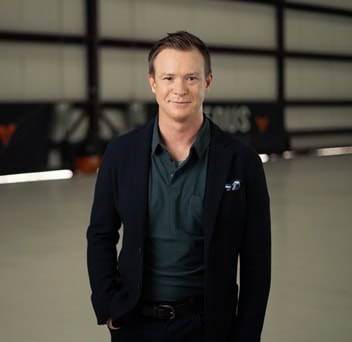
Curt Steinhorst

  • The attention guy who ran People at a rocket company
  • Former Head of People at Venus Aerospace
  • Bestselling author of Can I Have Your Attention? & 3x Top 30 Global Guru
Fee range*
Keynote: $20,000
Keynote (virtual): $15,000
Travel Fees
US: $2,000 travel buy-out plus hotel. The buy-out covers air travel, ground transport, meals, and incidentals.
Traveling From
Texas

Curt Steinhorst wrote the bestselling book, Can I Have Your Attention? (Wiley), then left the speaking circuit to run the people side of a rocket company. At Venus Aerospace, he helped build the teams behind the world’s most efficient rocket engine. The team designed, built, tested, and successfully flew the first high-thrust rotating detonation engine...

read the rest

Curt Steinhorst wrote the bestselling book, Can I Have Your Attention? (Wiley), then left the speaking circuit to run the people side of a rocket company.

At Venus Aerospace, he helped build the teams behind the world’s most efficient rocket engine. The team designed, built, tested, and successfully flew the first high-thrust rotating detonation engine in under four years, on less than $80 million, making it the most capital-efficient rocket-engine program in history.

Curt has delivered 500+ keynotes across four continents for clients including JPMorgan Chase, AT&T, Nike, Marriott, Accenture, Cisco, Deloitte, Southwest Airlines, KPMG, and the U.S. Naval Academy, and has been named a Top 30 Global Guru three times.

Along with speaking, he contributes to Forbes and has spent fifteen years preparing influential people for their biggest moments, from Heisman acceptance speeches to pitches where millions are won or lost.

Today, his keynotes cover leadership, attention, and doing hard things without being hard on each other. Because even when it’s rocket science, the hardest part is human.

Curt lives in Frisco, Texas, with his wife and 3 kids. Off stage, he coaches their basketball and baseball teams, which is group dynamics research with higher stakes and harder crowds. Curt has gone his entire career without a cold plunge, and he has no plans for that to change.

read less

Curt Steinhorst in Media

Speaker Programs

Rethinking Leadership: A new model for leadership in the AI-driven workplace.
Our model of leadership has needed an overhaul for years. Leaders are expected to make good decisions without enough information, keep up with a flood of messages, be available whenever someone needs them, and somehow ...more
Our model of leadership has needed an overhaul for years. Leaders are expected to make good decisions without enough information, keep up with a flood of messages, be available whenever someone needs them, and somehow still have time to think. More and more of the job has become keeping up. AI can help with that. It can make information easier to find and take some of the load off. But it cannot make a group work well together. The human work we’ve labeled “soft” cannot keep being left until everything else is done. In May 2025, Venus Aerospace flew the world’s first high-thrust rotating detonation rocket engine. Whether it flew came down to the human side of the work: did everyone know their own job and let the others do theirs, could they argue without it getting personal, and did they like each other enough to laugh on a day when a mistake could cost a life? In this keynote, Curt Steinhorst draws on fifteen years working with leaders from Nike to the U.S. Naval Academy and on his work as Head of People at Venus Aerospace to make the case for a leader’s job that gets easier as the tools get better: what comes off their plate, what stays, and how to build a team that will tell you the truth while there is still time to use it. ...less
Rethinking Culture: Building a culture that does hard things without burning out.
Somewhere along the way, culture went from eating strategy for breakfast to cupcakes for the anniversary/birthday/get well soon monthly party. That version of culture is a distraction from the thing that decides whether a culture ...more
Somewhere along the way, culture went from eating strategy for breakfast to cupcakes for the anniversary/birthday/get well soon monthly party. That version of culture is a distraction from the thing that decides whether a culture is healthy: the work people are asked to do, and how they are asked to do it. The test comes when the work gets hard, when someone has to admit they are stuck, challenge an idea, or try something that might fail. At Venus Aerospace, the question was how to build a company capable of doing something extraordinarily difficult without burning people out. In the company’s language: How do we move at Mach 9 without burning out? In May 2025, Venus flew the world’s first high-thrust rotating detonation rocket engine, the result of the fastest and most capital-efficient rocket engine development program in history: from idea to flight in under four years and for less than $80 million. Curt Steinhorst was Head of People at Venus, where he wrote the Venus Flight Plan (five values that guided how the company worked, who it hired, and what it tolerated) and implemented the plan across the organization. Some of what the company tried worked. Some of it did not. In this keynote, he draws on both, and on fifteen years working with leaders across industries, to explore how teams work through uncertainty, what sustains people through demanding work, and whether greater pressure always produces better work. ...less
Finding Focus in a Distracting World: Focusing on what matters when everything is a priority, at work and beyond it.
Technology can take routine work off a team’s plate. It can also make it easier to send more messages, launch more projects, and fill every hour it saves. The question is whether it gives people ...more
Technology can take routine work off a team’s plate. It can also make it easier to send more messages, launch more projects, and fill every hour it saves. The question is whether it gives people attention back for work that needs their judgment, or simply raises the volume of work they are expected to keep up with. Somewhere along the line, responding became the job and being reachable became proof you were doing it. A day cut into two-minute pieces by requests that have nothing to do with one another doesn’t add up to a day’s work, however many hours went into it. More often than not, the problem isn’t how much people have to do. It’s how divided their attention is, and because it got divided one reasonable choice at a time, that part a leader can change. Drawing on over a decade of research and advising companies on attention and workplace dynamics, this keynote makes the case that distraction is confusion about what matters, and that the outcomes leaders are measured on, from productivity to how fast a team adapts to change to engagement and well-being, move when leaders protect attention on the team’s behalf. That takes a different way of approaching, measuring, and organizing work, one that respects the limit on human attention, because the same limit is what makes a person valuable once it’s pointed at the right thing. For everyone in the room, it starts with deciding what deserves attention, recognizing what is pulling it away, and making room for the work and people they care about. ...less
Breaking Through the Noise: Communicating so people hear it, believe it, and act on it.
Producing a message is easy now. Getting someone to pay attention, trust it, and act is still human work. Your ability to lead an organization or win a customer’s business depends on it. Information has ...more
Producing a message is easy now. Getting someone to pay attention, trust it, and act is still human work. Your ability to lead an organization or win a customer’s business depends on it. Information has exploded, publishing is free, and Graphite estimates that roughly half of newly published English- language articles are primarily AI-generated. What once captured attention now creates noise, and even what works today may not work tomorrow. Why do people ignore information they need and pay attention to things they never intended to? The answer matters when you’re asking someone to reconsider a decision, support a change, or buy what you’re selling. Your audience brings different experiences, expectations, and reasons for listening. And increasingly, they’re accustomed to information selected specifically for them. How do you get them to consider an idea they weren’t looking for, and might not initially want to hear? In this keynote, Curt Steinhorst, bestselling author of Can I Have Your Attention?, draws on the science of attention to show you how to shape and deliver messages that break through the noise. This presentation is for anyone whose work depends on influencing others. It can be tailored to the communication challenges specific to executives, sales professionals, and communications leaders. You’ll get beyond this week’s LinkedIn algorithm tricks and into what makes people pay attention when the noise is so loud. ...less

Similar Speakers

* Fee ranges listed on this website are intended to serve as a guideline. The speaker's speaking fee should fall within this “fee range” listed. A speaker's fee may be at the high end or low end (or possibly outside of) the listed “fee range”. Additionally, a speaker may change his/her fee without notice. For a speaker's most current speaking fee or to check availability, please contact us.

Contact one of our talent experts today.

Receive no obligation help from us today. We represent our speakers equally, so our goal is to provide a keynote speaker that best fits YOU.

Contact us now